

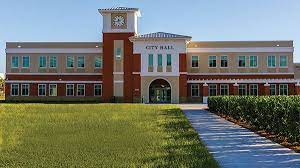
City traffic engineers brought a long-awaited study to the council on the possibility of reducing residential road speed limits from 30 to 25 miles per hour — a process that has been in the works since at least 2022. The study was conducted by Kimley Horn, an independent engineering firm, and examined crash data and speeds across Palm Coast’s 1,700 residential roads. The findings confirmed that average speeds on those roads do fall within the threshold required to justify a reduction, but the sheer cost and scope of implementing the change gave the council pause.
The core challenge is Florida law. The state sets 30 miles per hour as the default residential speed limit, and any reduction to 25 requires a posted sign at every point of change. With collectors and residential streets running at different speed limits, the city would need to install approximately 2,400 new signs across the city. Going out to bid for this work is estimated at nearly $1.3 million. Doing the work in-house would cost around $600,000 but would require hiring a full-time staff member and take an estimated 18 months to complete. On top of that, all those signs would need to be maintained by the city in perpetuity.
Council Member Miller noted that there have been no fatalities on the specific residential roads in question, though he acknowledged a tragic e-bike fatality was on a different type of road. He raised concerns about the return on investment, pointing out that the major safety problems in the city are on collector roads and main arteries, not side streets. ‘I want to make sure that we’re putting the money to the highest ROI use of it rather than taking it away from something that may be more effective,’ he said. Traffic staff also noted a troubling statistic: at crosswalks near Belterra Elementary and Middle School, the driver yield rate for pedestrians drops to just 8 percent after crossing guards leave — one quarter of the national average — suggesting more urgent crosswalk improvements may be a higher priority.
Several members of the public also weighed in. Jeremy Davis said that changing a number on a sign does not necessarily change how people drive, and asked for clearer data showing the change would actually improve safety. Kirk Whittington, a resident on a straight-away road, argued that late-for-work speeders do not care what a sign says, and raised concerns about the visual impact of placing signs in residents’ front yards. City staff noted that the Sheriff’s Office typically does not stop drivers until they are more than 5 miles per hour over the speed limit, meaning a 25 mph zone would functionally become a 30 mph road anyway. Public comment was opened and closed with no vote taken.
The council reached a consensus — without a formal vote — to continue pursuing grant funding from the Tomoka Parkway Organization, or TPO, and at the federal level through the U.S. Department of Transportation, rather than spending city funds on the sign project at this time. Council Member Gambaro suggested leveraging the city’s connection to federal transportation officials, specifically citing a contact at the U.S. Department of Transportation. The council also agreed to push forward separately on a speed cushion program for collector roads and to focus any immediate safety spending on the most critical crosswalk locations.
Resident Alleges Retaliation by Code Enforcement; Another Challenges City Charter Over Vacant Seat and Bond Vote
The public comment portion of the meeting surfaced two significant concerns from residents about how the city handles dissent and follows its own charter rules. The first came from Jeremy Davis, who told the council that a resident had contacted him to report that after speaking up on the city’s Facebook page, code enforcement began visiting their property repeatedly — checking for violations in a way the resident believed was targeted. Davis also noted that 11 city workers and a sheriff’s deputy were sent to his own home at one point, without a clear explanation being given. ‘Speaking up about problems should not make someone the problem,’ Davis told the council.
Mayor Norris acknowledged the concern and said it is something that has been brought to the city manager’s attention. City Manager Doug Akins said he is personally following up on Davis’s individual issues in a meeting scheduled for Friday and encouraged any resident who feels they have been targeted to contact his office directly. ‘I don’t want anyone in the city targeted by code enforcement. That’s just ridiculous,’ Norris said. The city manager confirmed he is currently working through about half a dozen similar complaints from different sources.
Resident Jeannie Duarte raised a different concern during general public comment, challenging the city’s compliance with its own charter. She argued that a $330 million bond was approved without the voter approval required for major financial obligations under Section 3E of the charter. She also alleged that language in the city charter related to the mayor vacancy seat and special election requirements was altered without voter approval, and that the altered version was recited by the city attorney in August 2024 and shared with the charter review committee. She called for a written clarification within three days and asked that the charter review be tabled until the 2028 election, when all council seats would be fully elected. ‘Everyone of you is under oath every time you’re sitting on that dais,’ she said.
Council Member Miller asked the city attorney directly whether the charter had been altered without voter approval. City Attorney Marcus Duffy responded that the charter was last changed in 2018, when three amendments were placed before voters through a referendum and approved by a majority of electors. He confirmed that there is no provision in the charter for a special election to fill a vacant council seat — only the mayor’s seat carries that requirement. He also confirmed that the current charter review is in compliance with the charter, which requires a review no less than every 10 years. The city attorney was firm that all charter actions taken in recent years have been lawful.
The evening ended with a dramatic scene during the final public comment when Duarte returned to the podium and pressed the city attorney to show her on official ballot samples where voters approved the removal of mandatory special election language for a mayor vacancy. Attorney Duffy declined to engage, saying the matter had already been litigated. The exchange escalated until Duarte was asked to leave the chamber and was escorted out by security at the direction of the mayor. Before the meeting was adjourned, Duffy addressed the council: ‘I have been on this dais for two years now, and for a year and a half, Miss Dwarte has pledged incorrect stuff, and she does not do her research. This has already been litigated. It is already done. Five people up here have moved on. You need to do the same.’
Palm Coast Fills Newly Created Parks and Recreation Advisory Board With Seven Community Volunteers
The City Council formally appointed members to the newly created Parks and Recreation Advisory Board, or PRAB, which was established in response to growing public feedback about parks and recreation programming in Palm Coast. Each of the five applicants who were present introduced themselves briefly before the council voted district by district. The board will hold its first meeting in April, and Parks and Recreation Director Hurst is expected to contact the appointed members with details soon.
For District 1, Megan Rizzo was the sole applicant and was appointed unanimously. Rizzo is a stay-at-home mother who homeschools her children and said she is already involved in recreation activities through the city. She has toured parks and recreation programs in other cities and said she wants Palm Coast to become an ‘influencer’ for how parks and recreation programs are run across Florida. For District 2, Deanna Lightfoot was selected from three candidates in a paper ballot vote, with all three council members’ votes going to her. Lightfoot is a 33-year Palm Coast resident with a background in government resources and process improvement. For District 3, John Subers received all three votes to represent his district.
For District 4, Philip McClure was selected unanimously from three candidates. McClure is an active-duty National Guard member with a master’s degree in sport management and is president of Coastal Palm Sports, a local youth baseball organization that is expanding into other sports. He told the council his children participate in football and baseball across the city and that he sees parks and recreation as ‘probably the heartbeat for the youth’ of a growing Palm Coast.
For the at-large seat — open to any district — Julia Wald received four votes from the five-member council and was appointed. Wald was born and raised in Palm Coast, is a small business owner and artist, and emphasized the importance of environmental stewardship and green spaces in a rapidly developing city. Two alternates were also selected: Ms. Olaherti received four votes, and Ms. McManis received five votes. No council members voted against any of the appointments. Mayor Norris thanked all who applied, noting that those willing to serve are doing more than just providing feedback from the sidelines. ‘Really appreciate it for not just being one of those that constantly provides feedback, but is willing to actually serve,’ he said.