

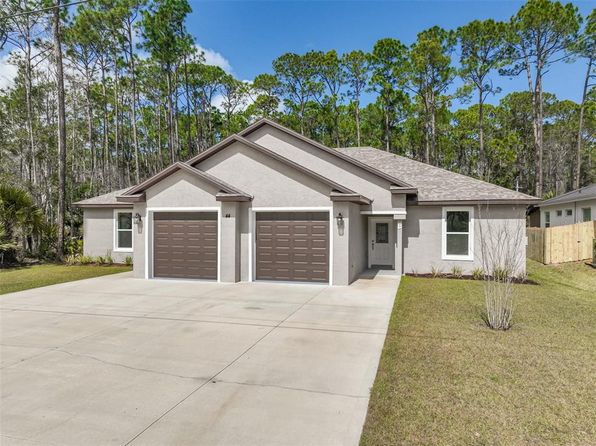
The Palm Coast City Council workshopped proposed changes Tuesday to the city’s duplex zoning regulations, focused on whether existing duplex lots could be split into two separate single-family lots as a way to create more attainable homeownership options. Staff is expected to bring back formal options alongside the city’s pending affordable housing study, projected to return in April or May 2026.
Planning Manager Fong Nguyen and Senior Planner Estelle Lenz presented the current rules: duplex lots must be at least 9,000 square feet, with a minimum 80-foot width. If split into two separate lots, each side must be at least 4,000 square feet and 30 feet wide. Currently, converting a duplex into dual ownership requires either a condominium form of ownership or a formal lot split. The council expressed concern that the condo route creates complicated shared maintenance agreements — particularly for roofs — that are not practical for individual owners.
Local builder Tony Amaral, who brought the concept to the council back in November, told the council he could potentially build a roughly 1,100-square-foot single-family home on each half of a split duplex lot and target a price somewhere between $250,000 and $290,000. “Our goal is to try to shoot for $250,000,” he said. Mayor Norris pointed to a comparable new-construction home in Nassau County — 1,491 square feet — currently selling for $358,000, calling it an example of what Palm Coast is trying to avoid. “The lots keep getting smaller and the prices aren’t going down,” he said.
The council agreed by consensus to have staff explore a third option beyond the existing condo and lot-split routes: the possibility of two separate detached units on a single duplex parcel without requiring a formal condo structure or physical division of the land. Vice Mayor Pontieri also pushed to eliminate the condo ownership option altogether, arguing it was never the intent of duplex zoning and creates more problems than it solves. Building official concerns about firewall requirements between split units were raised by members of the public, including contractor Jeff Adams, who cautioned the council to ensure fire safety separation requirements are clearly addressed as the ordinance moves forward.
Staff noted there are 219 vacant duplex-zoned drop lots in Palm Coast — mostly in the southern portion of the city — that could benefit from clarified rules. The full options will come back alongside the broader affordable housing study. The council also asked the Flagler County Affordable Housing Committee to review whatever final proposal comes forward.
Vice Mayor Raises Alarm Over ‘Centralized Power’ in City’s Land Development Code; Council Directs Multiple Reforms to Concurrency Rules
A wide-ranging review of Palm Coast’s Land Development Code during Tuesday’s workshop led to a pointed exchange about whether the city manager holds too much decision-making authority under the code’s current language. Vice Mayor Pontieri raised the issue while reviewing Chapter 7 (Concurrency Management) and said the concern applies broadly across multiple chapters the council is in the process of updating.
“I am concerned from a centralized power standpoint,” Pontieri said, noting that the Land Development Code repeatedly designates the city manager as the “land use administrator” with authority to interpret the code, approve certain development orders, and grant deviations from standards. She proposed that the directors of individual city departments — utilities, stormwater, transportation — should be recognized as the designated subject matter experts when decisions fall within their technical area of expertise, rather than all authority resting with a single non-elected official. “If there were a city manager who wanted to be somewhat of an activist, our policymaking could be undermined,” she said. City Attorney Marcus Mayfield noted the city manager already has authority to designate staff as needed, and suggested the topic be addressed in the upcoming Chapter 14 (Glossary) update due in May.
On the substance of Chapter 7, the council directed several notable changes. Vice Mayor Pontieri moved to remove the exemption that currently shields hospitals from concurrency review — meaning hospitals would now be required to demonstrate that adequate infrastructure is in place before a development order is issued, just like any other applicant. The council reached consensus in favor. Pontieri also moved to remove a provision that allows applicants to defer concurrency review until a later stage of development, with staff agreeing the deferral option is no longer needed under current development patterns. The council reached consensus to remove it.
The council also asked staff to explore adding inflation protection language to the section governing proportionate-share transportation payments, citing concern that funds collected today will not cover the same infrastructure costs years later when a project is finally built. Staff was directed to look for language that adjusts contribution amounts based on a project’s anticipated build-out timeline and an applicable inflation factor. There was no formal vote on Chapter 7 changes; the council’s direction will be incorporated into a future ordinance.
Palm Coast Updates Engineering and Environmental Land Development Code Chapters; ADU Flood Zone Language and Wellfield Buffers Get Attention
Palm Coast’s City Council workshopped proposed updates to two additional chapters of its Land Development Code on Tuesday: Chapter 9 (Engineering, Design, and Utilities) and Chapter 10 (Environmental and Cultural Resource Protection). Neither chapter came to a vote, but the council gave staff significant direction on clarifications and additional safeguards to incorporate before the chapters return as formal ordinances.
On Chapter 9, Vice Mayor Pontieri raised concerns about a provision allowing developers to post a letter of credit as a construction surety instead of a cash or performance bond. After discussion, the council and staff agreed that the language should be changed to require an “irrevocable letter of credit” to ensure stronger protections if a developer fails to complete required infrastructure. The council also flagged unclear language on pedestrian path easements and stormwater design criteria, and directed staff to add reference standards, clarify city versus private maintenance responsibilities, and ensure consistency with applicable technical manuals. Pontieri also asked staff to add inflation-adjustment language for proportionate-share transportation contributions to ensure funds collected years before construction actually cover current costs.
On Chapter 10, the council focused heavily on flood zone language, particularly after discussion about the potential future need to regulate Accessory Dwelling Units (ADUs) in special flood hazard areas. Vice Mayor Pontieri made clear she is not in favor of allowing ADUs but said the city needs to be prepared if the state preempts local rules. She directed staff to add language prohibiting new habitable spaces in special flood hazard areas, with the council reaching consensus. The council also debated whether the current wellfield protection setback of 500 feet — which already exceeds Florida’s 250-foot statutory requirement — should be expanded further for industrial uses. Staff was asked to research the issue and report back.
For cultural and historic resources, the code now adds procedures for what should happen if human remains are discovered during construction. For environmental enforcement, Pontieri pushed staff to change language in floodplain violation notices from “authorized to serve” to “shall serve,” adding legal teeth to stop-work orders when unpermitted impacts to wetlands or floodplains occur. Staff agreed to make the change, pending consensus from the full council. No formal votes were taken on these chapters.