

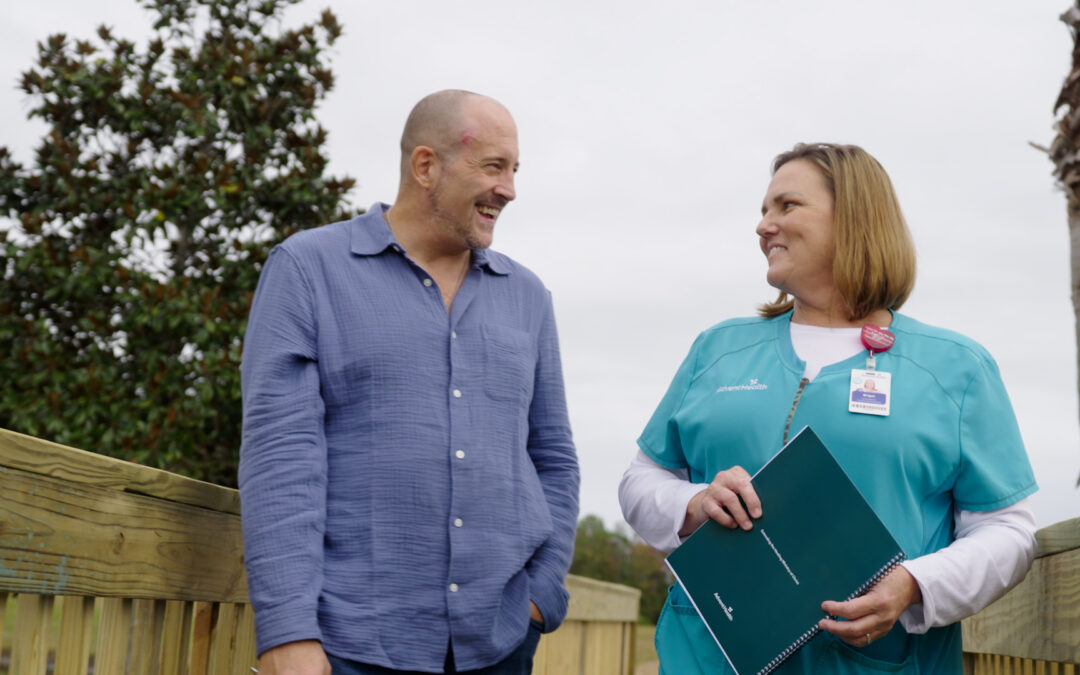
When Phillip McKinney was admitted to AdventHealth Palm Coast with a serious medical crisis, his problems did not end at the hospital doors. What happened next — through a free hospital program designed to help patients facing barriers beyond their health — would change the course of his life.
A Health Crisis with No Clear Path Forward
McKinney, 52, had been feeling increasingly ill before doctors diagnosed him with severe anemia caused by internal gastrointestinal bleeding. He received blood transfusions and further testing identified the source of the bleeding. But as discharge approached, it became clear that leaving the hospital was only the beginning of his challenges.
McKinney had no reliable transportation, faced mounting medical bills, and needed consistent follow-up care. A previous brain infection had left him with cognitive difficulties that made organizing paperwork and keeping track of appointments difficult. “I never saw myself in that situation,” McKinney said. “But it can happen to anybody.”
Community Care Steps In
Before he left the hospital, an AdventHealth financial specialist asked whether he had a way to return for follow-up appointments. When he said no, she connected him to Community Care — a free program offered by AdventHealth to patients facing financial hardship or other barriers outside the hospital. The program pairs eligible patients with a social worker who helps coordinate care, connect them to local resources, and create a manageable path forward at no cost to the patient.
AdventHealth social worker Briget Parkins met McKinney before his discharge and quickly recognized how overwhelmed he was. “So we slowed down and wrote everything out,” Parkins said. “Then we worked through it step by step.” Together, they organized his paperwork into a binder, mapped out his follow-up visits, applied for financial assistance, and connected him with transportation support. McKinney also purchased a bicycle so he could travel to appointments independently.
A Second Diagnosis
Just as McKinney was regaining his footing, a lesion near his temple was identified as an aggressive form of skin cancer. Treatment required coordinating with multiple specialists, submitting financial assistance applications, and working with outside agencies. “The phone calls. The paperwork. The approvals,” McKinney said. “I couldn’t have done it by myself.” Parkins remained closely involved throughout the process until McKinney was able to undergo surgery. The cancer was successfully removed, and he is now cancer-free.
A Full Rebuild
Since completing his treatment, McKinney has returned to work, secured housing, and now manages his medical care on his own. He has officially graduated from Community Care — a milestone in the program that indicates a patient no longer needs ongoing support. “They treated me like a person,” McKinney said. “Not a problem. Not a bill. A person.”
The Bigger Picture
Community Care focuses specifically on patients who are at risk of being left behind — those who are uninsured, underinsured, or struggling with basic needs while managing serious health issues. By addressing barriers like transportation costs and the complexity of navigating the health system, the program aims to prevent the kinds of delays that can lead to complications or repeat hospitalizations.
AdventHealth describes itself as a faith-based, nonprofit health system and says programs like Community Care reflect its mission to extend care beyond the hospital. In Flagler County, where many residents face transportation challenges and rising costs of living, hospital leaders say the program directly addresses the nonmedical factors that often lead to missed appointments or avoidable hospital visits.
For McKinney, the experience carried a message he hopes others will hear. “It gave me a chance to get back on my feet,” he said. “Sometimes you just need someone to help you take the next step.”